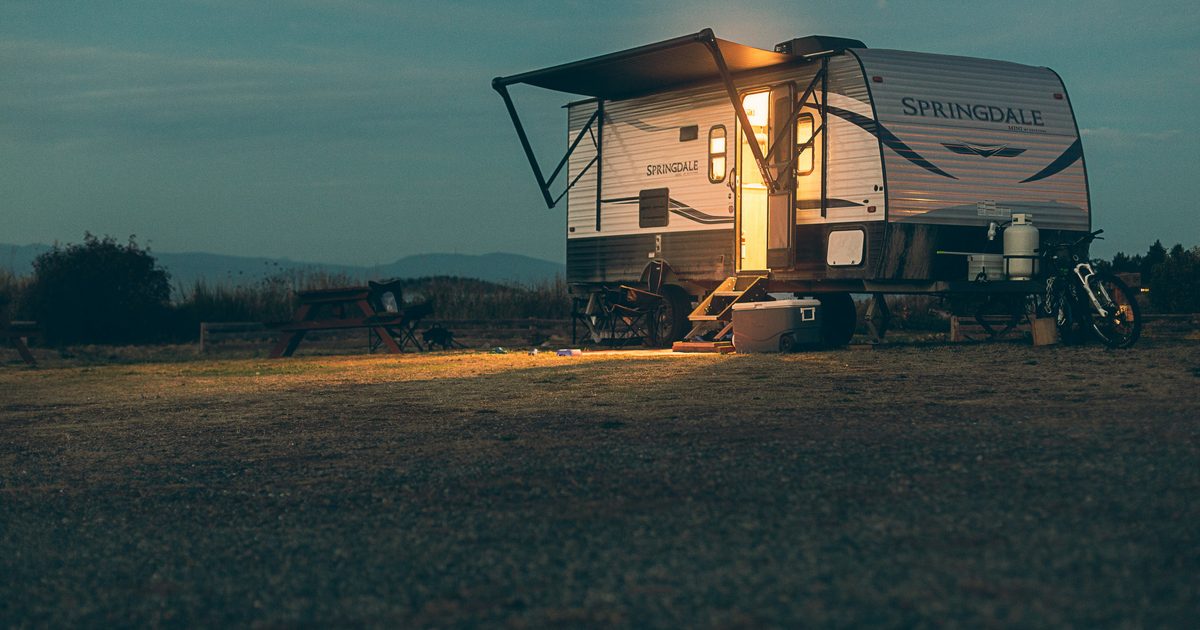

Nothing sours a camping trip faster than reaching for something that is still sitting at home. A forgotten sewer hose or a missing coffee filter turns a relaxing weekend into a run to the nearest store.
The fix is a packing list you use every single time. Once the basics live in the rig full time, getting ready for a trip takes an hour instead of a whole day.
Here are 40 things worth packing in any camper, grouped by where they get used. Adjust it to fit your rig and the way you camp.
How To Use This Packing List
Most of these items should stay in the RV year round. Load them once, and the only things left to pack are food, clothes, and medications.
Keep an eye on weight as the list grows. Every RV has a cargo carrying capacity printed on a sticker near the door, and it fills up faster than people expect. Water is the big one, since a full fresh tank can add several hundred pounds.
Print this list or save it to your phone. Walking through it before each trip catches the one thing that got left on the kitchen counter.
Hookup and Setup Gear
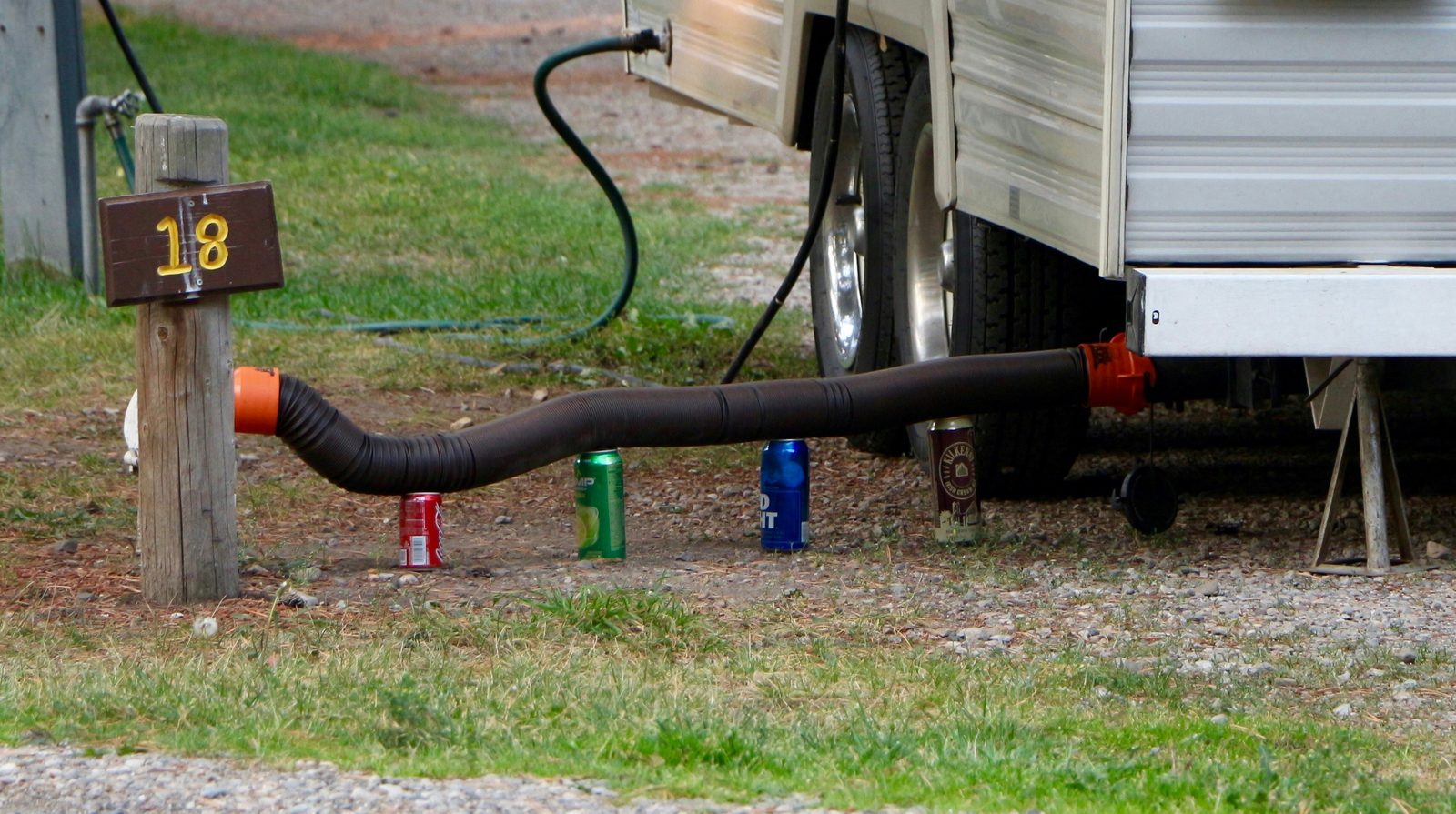
This is the gear that connects the camper to the campsite. Skip one piece and the whole setup stalls.
1. Sewer Hose Kit
A good sewer hose with both fittings and a clear elbow is not optional. The clear section lets you see when the tank has finished draining. Pack a hose support too, since a sagging hose never empties all the way.
2. Drinking Water Hose
A white or blue hose marked safe for drinking keeps the fresh tank clean. A garden hose can leach a plastic taste into the water. Keep it stored separately from anything that touches the sewer side.
3. Water Pressure Regulator
Campground water pressure swings wildly from one park to the next. A regulator caps it at a level the plumbing can handle. It costs very little and it prevents burst lines inside the walls.
4. Inline Water Filter
Campground water quality is a gamble. A simple inline filter screws onto the hose and cuts out sediment and most of the taste. Swap it out every few months of use.
5. Leveling Blocks and Wheel Chocks
An unlevel RV means doors that swing shut and a fridge that struggles to cool. Stackable blocks fix the side to side tilt in a couple of minutes. Chocks go in right after, before anything else gets unhooked.
Also pack: surge protector, 30 to 50 amp adapter, heavy extension cord, disposable gloves for tank duty.
Tools and Roadside Safety
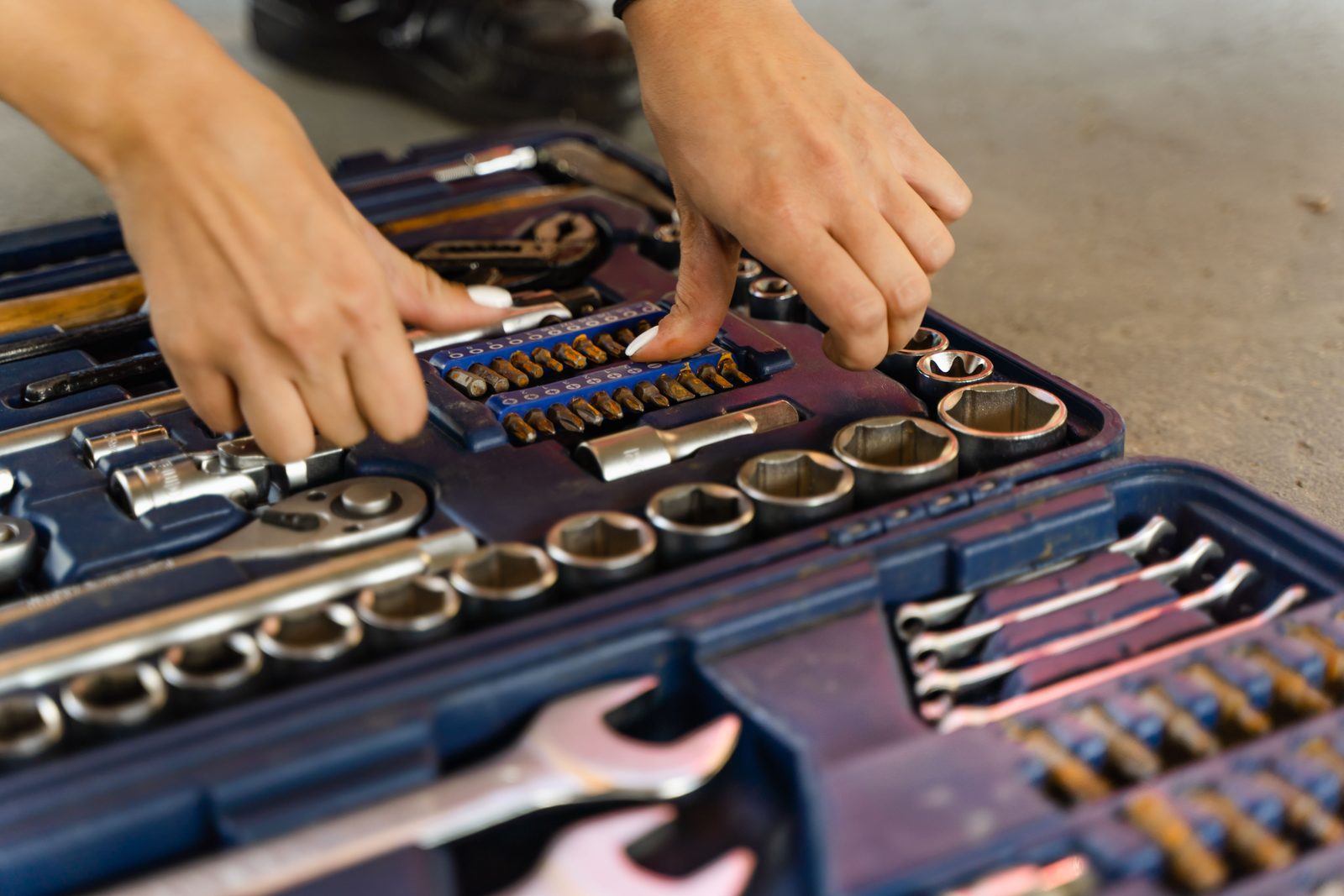
Things shake loose on the road. A small kit handles most of what comes up before it turns into a tow bill.
6. Tire Pressure Gauge
Underinflated tires are the leading cause of RV blowouts. Check every tire cold, before driving, on every travel day. A dial or digital gauge reads far more accurately than the pencil style ones.
7. Basic Tool Kit
A socket set, screwdrivers, pliers, and an adjustable wrench cover almost everything. Add a cordless drill if there is room for it. Vibration loosens screws constantly, so a screwdriver gets used more than anything else in the box.
8. Portable Jump Starter
RV batteries die at the worst times, often in campgrounds with no neighbors nearby. A lithium jump pack starts the engine without another vehicle. Most double as a phone charger, which earns them their storage space.
9. Fire Extinguisher
Every RV comes with one, and most are too small and long past their date. Check the gauge before each season and add a second one near the bedroom. Getting out is always the first move, but a working extinguisher buys time.
10. Reflective Warning Triangles
A breakdown on a highway shoulder is genuinely dangerous. Triangles set out behind the rig give other drivers time to move over. They pack flat and weigh almost nothing.
Also pack: duct tape, spare fuses, work gloves, tire sealant, a torque wrench for lug nuts.
Kitchen and Cooking Gear

RV kitchens are small, so every item has to earn its spot. The goal is gear that stacks, nests, or does more than one job.
11. Nesting Cookware Set
Pots and pans that stack inside each other save a whole cabinet. Look for a set with removable handles. Silicone or coated pans are quieter on travel days than bare metal.
12. Cast Iron Skillet
One skillet handles the stove, the oven, the grill, and the campfire. It is heavy, so it is worth counting against your cargo weight. For most campers the versatility wins.
13. Sharp Knife and Cutting Board
One good chef knife beats a full block of dull ones. A thin flexible board doubles as extra counter space over the sink. Store the knife in a sheath so it does not rattle around a drawer.
14. Coffee Setup
Decide how you make coffee before you leave, not the first morning out. A pour over cone or a percolator works with no power at all. That matters a lot when boondocking.
15. Food Storage Containers
Square containers use cabinet space far better than round ones. Snap lids keep things from spilling on rough roads. They also keep dry goods safe from mice, which get into campers more often than people think.
Also pack: can opener, mixing bowls, dish tub, biodegradable soap, trash bags, paper towels, a kettle.
Bedding and Bathroom
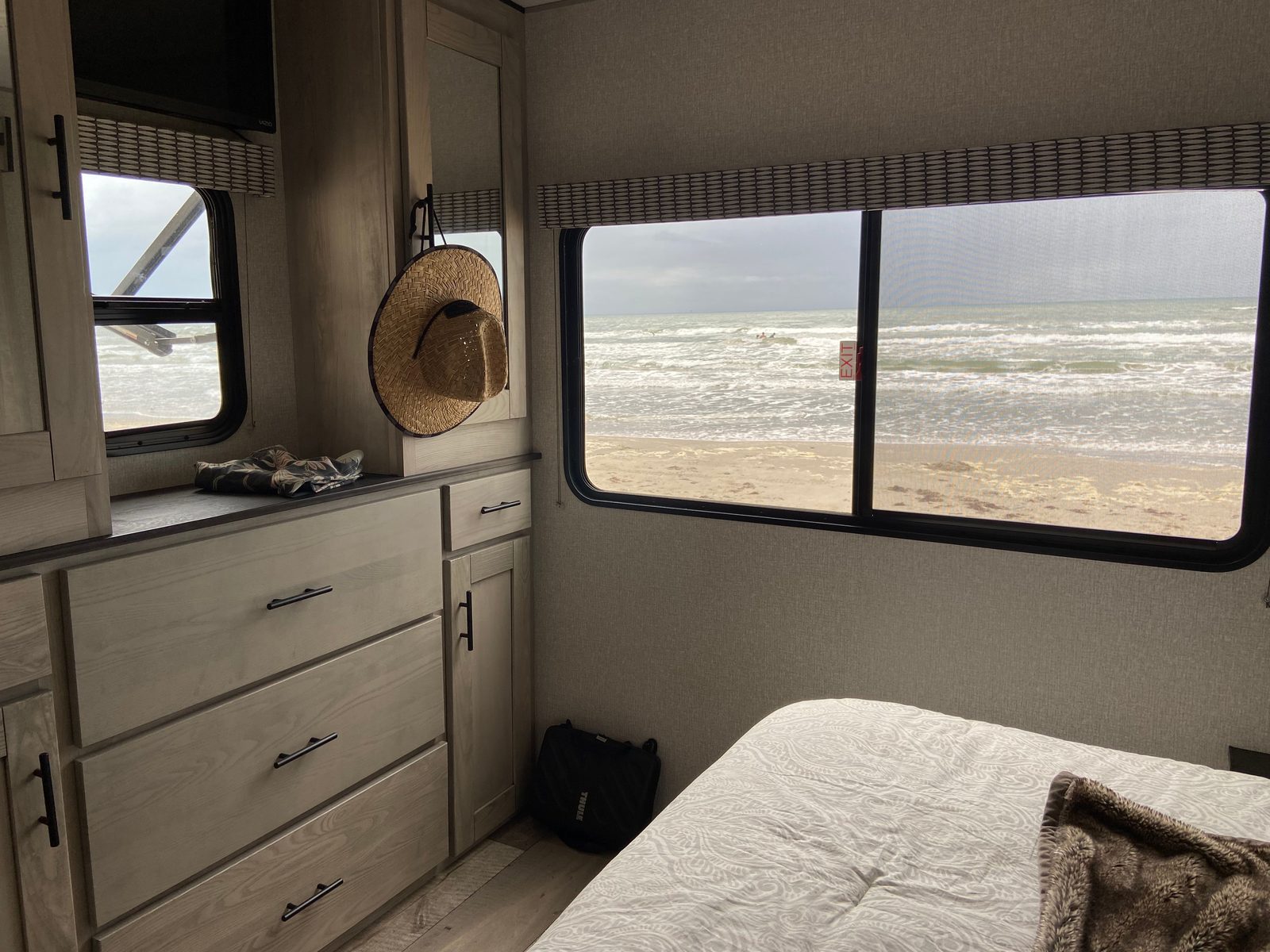
Sleeping well is what makes a trip feel like a vacation. RV mattresses and bathrooms both have quirks worth planning around.
16. Sheets Sized For an RV Mattress
RV mattresses are shorter and thinner than the household sizes they are named after. Regular queen sheets bunch up and slide off. Look for sheets labeled RV queen or short queen.
17. Extra Blanket
Campers cool off fast once the furnace shuts down. A warm blanket saves propane on chilly nights. It also doubles as a picnic blanket outside.
18. Quick Dry Towels
Cotton towels stay damp for days in a small bathroom and start to smell. Microfiber or waffle weave towels dry in a few hours. They fold down small, which helps in tight cabinets.
19. RV Safe Toilet Paper
Regular toilet paper does not break down fast enough and clogs the black tank. RV rated paper dissolves quickly and costs about the same. This is one item where the special version genuinely matters.
Also pack: pillows, hanging shower caddy, bath mat, black tank treatment, a small trash can.
Clothing and Personal Items
Weather changes fast, and campgrounds rarely have a store nearby. Packing in layers covers more conditions with fewer bags.
20. Layers Instead of Bulk
A base layer, a fleece, and a shell handle a huge temperature range. Three thin pieces beat one heavy coat and pack much smaller. Mornings and evenings run colder than most people plan for.
21. Rain Jacket
Rain finds every camping trip eventually. A packable shell keeps a wet afternoon from ending the day. Hang it near the door so it dries instead of sitting in a wet pile.
22. Camp Shoes
A pair of easy on shoes by the door saves constant lacing and unlacing. Campsites are dusty, muddy, or both. Keeping one dedicated outdoor pair keeps the floors much cleaner.
23. Shower Sandals
Campground shower houses are shared space. Cheap flip flops make them a lot more pleasant. They dry fast and take up almost no room.
Also pack: hat, sunglasses, swimsuit, laundry bag, toiletries, plenty of socks.
Campsite Comfort
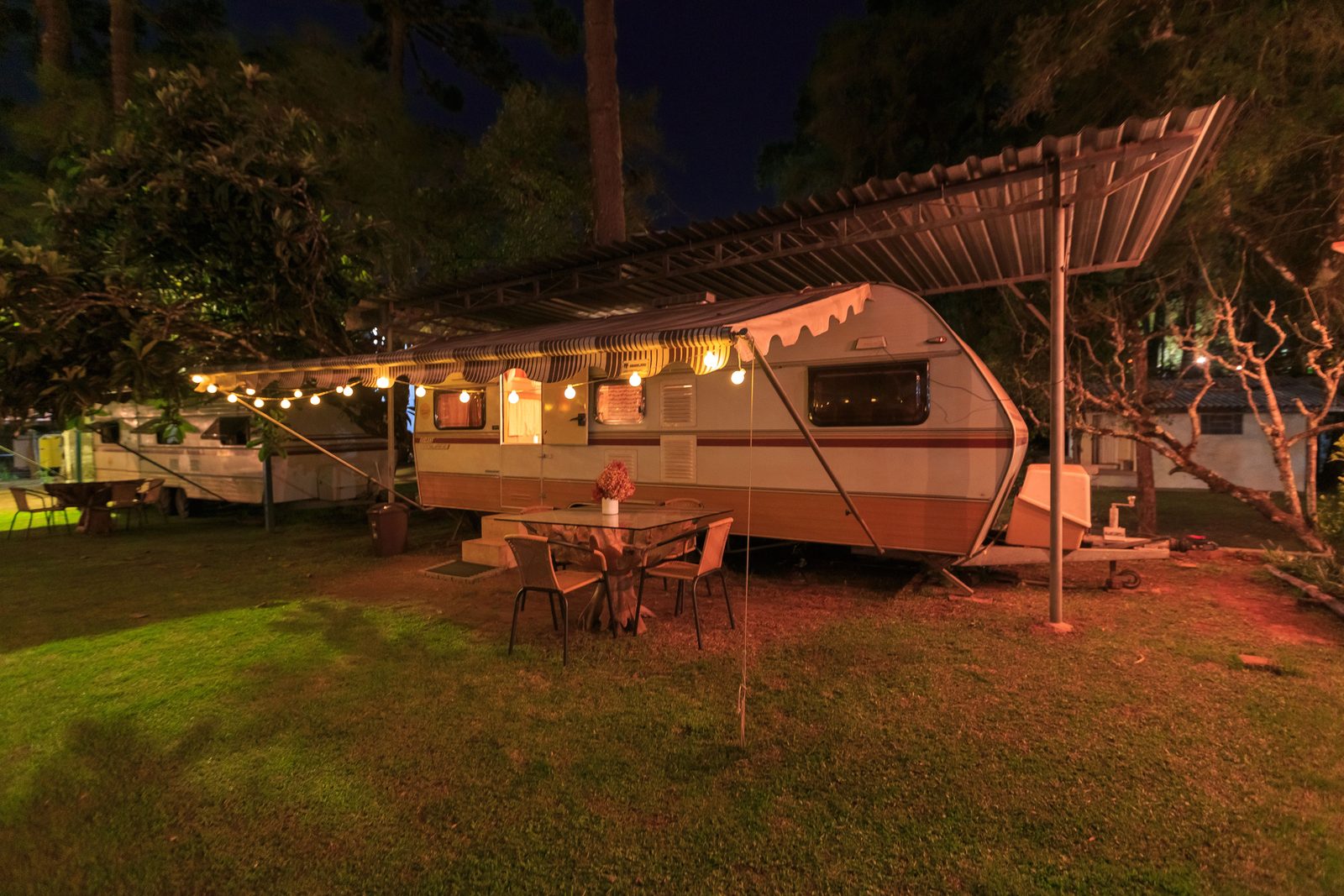
The space outside the door is where most of the time gets spent. A little gear makes it feel like a second room.
24. Camp Chairs
Pack one per person, plus a spare for visitors. Chairs with a cup holder and a side table earn their keep. Test the weight rating before buying a cheap set.
25. Outdoor Mat
A mat under the awning keeps dirt and sand from tracking inside. It also marks off your space at a crowded campground. Mesh styles let grass breathe, which many parks now require.
26. Folding Table
Not every site has a picnic table, and the ones that do are often wobbly or filthy. A folding table gives you a clean surface for cooking and eating. It stores flat under a bed or in a bay.
27. Awning Lights
String lights make the site feel warm once the sun drops. Battery or USB versions work fine with no hookups. Warm white looks better than the harsh bright ones.
28. Cooler
RV fridges are small, and a cooler carries the overflow. It also keeps drinks outside so the door stays shut. On travel days it holds cold food while the fridge is switched off.
Also pack: bug spray, citronella candles, a lantern, a hammock, firewood gloves.
Cleaning and Maintenance
Small spaces get dirty fast. Ten minutes of tidying a day keeps a camper livable.
29. Small Broom and Dustpan
Dirt comes in on every pair of shoes. A short handled broom fits in a closet and gets used daily. It is one of the most reached for items in any RV.
30. Disinfecting Wipes
Counters, tables, and the bathroom all get wiped down constantly in a small space. Wipes handle it without hauling out a bucket. They also clean up road grime on the outside of the door.
31. Spare Light Bulbs and Fuses
RV bulbs and 12 volt fuses burn out on their own schedule. A small assortment costs a few dollars. Finding the right one on the road is much harder than it sounds.
32. Handheld Vacuum
A cordless vacuum picks up crumbs, sand, and pet hair in seconds. Full sized vacuums are too bulky for most rigs. Charge it while driving so it is ready at the site.
Also pack: microfiber cloths, glass cleaner, sealant tape, silicone spray, a small bucket.
Health, Safety and Paperwork
This is the section people skip until the one time they need it. None of it takes much room.
33. First Aid Kit
Build or buy a kit and then actually check what is inside. Add anything your family uses often, plus tweezers and blister pads. Campgrounds are frequently a long way from a pharmacy.
34. Prescriptions and Daily Medications
Bring more than the trip length in case plans change. Keep them in the original labeled bottles when crossing state lines. A photo of each label on your phone helps if a refill is needed.
35. Registration and Insurance
Keep current paperwork for both the RV and the tow vehicle in one folder. Campgrounds sometimes ask at check in. Store a scanned copy in your phone as a backup.
36. Roadside Assistance Information
Regular auto plans often will not tow a motorhome or a large trailer. Confirm your coverage handles the size and weight of your rig. Save the number somewhere you can find it without service.
Also pack: sunscreen, insect bite relief, reservation confirmations, emergency contacts, a fresh carbon monoxide detector battery.
Tech and Entertainment
Rainy afternoons happen on every trip. A few small things make them a lot easier.
37. Offline Maps
Cell service drops out on the way to most of the good spots. Download your route and the campground area before leaving. Paper maps as a backup are still worth the glove box space.
38. Power Bank
A large capacity battery keeps phones going when the rig is not plugged in. It also runs a fan or a string of lights overnight. Recharge it while driving.
39. Headlamps
Walking to the bathroom at night, checking a hitch, or finding a fuse all go better with both hands free. Pack one per person. Red light modes keep from blinding everyone at the site.
40. Games and Books
Card games and small board games fill a rainy day without any power. They also pack down to almost nothing. A deck of cards has rescued more camping trips than any gadget.
Also pack: charging cables, a cell booster or hotspot, a bluetooth speaker, a camera.
Final Walk Around Before Pulling Out
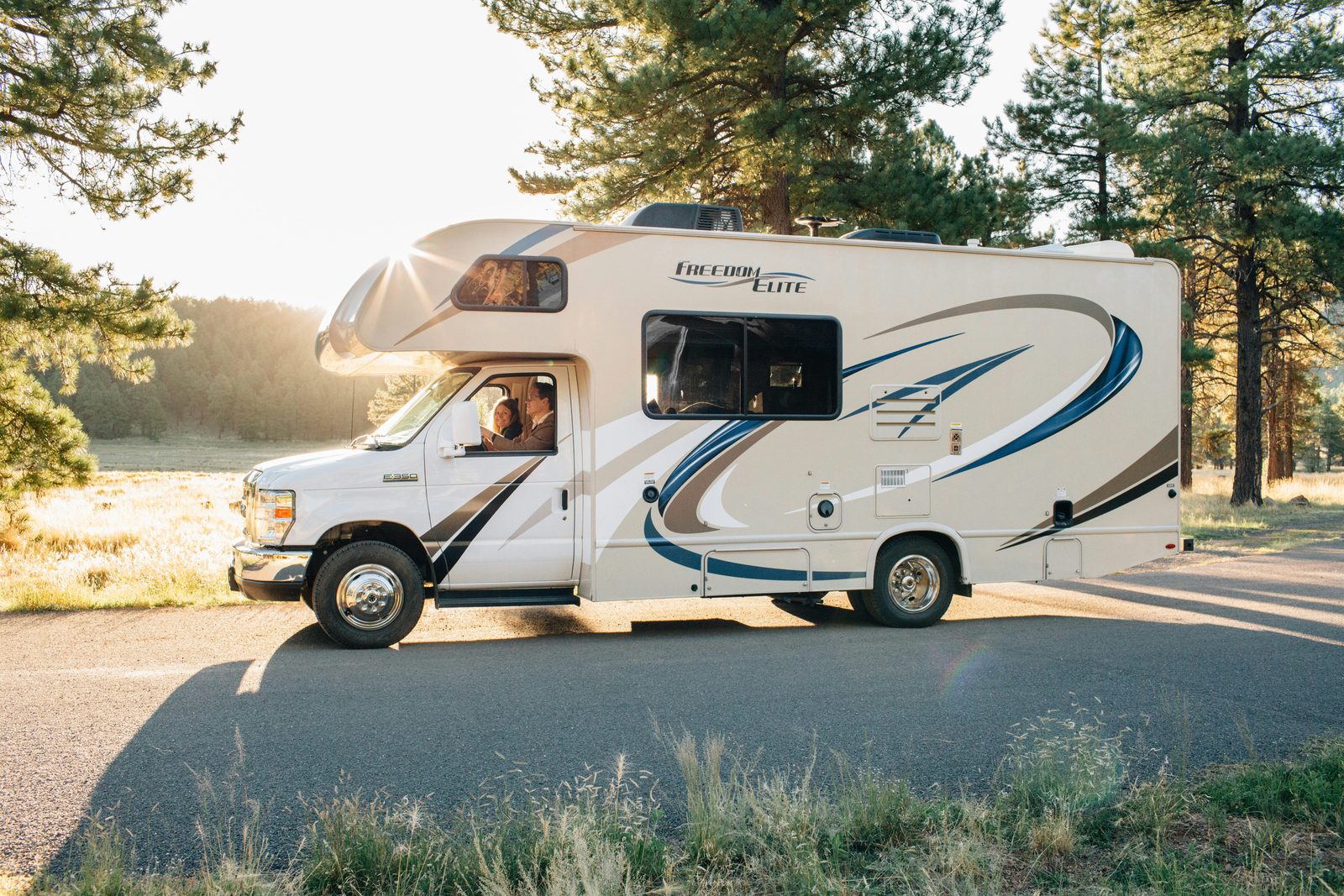
Packing the right gear only helps if the rig leaves the site in one piece. Do a slow lap around the outside every single time.
Check that the awning is in and latched, the steps are up, and the antenna is down. Look at the roof vents, the hatches, and every storage bay door. Confirm the slides are all the way in.
Then check the hitch, the safety chains, and the breakaway cable. Walk the site itself for anything left behind, especially chocks and leveling blocks. Turn the propane off at the tank before driving.
Getting Out There
A packing list feels like a lot the first time through. After a trip or two, most of it just lives in the camper and never comes out.
Start with the hookup gear and the safety items, since those are the ones that strand people. Everything else can be added over a few trips as you learn how you camp.
Keep a running note on your phone for anything you wished you had brought. That list becomes far more useful than any generic one. Happy camping.