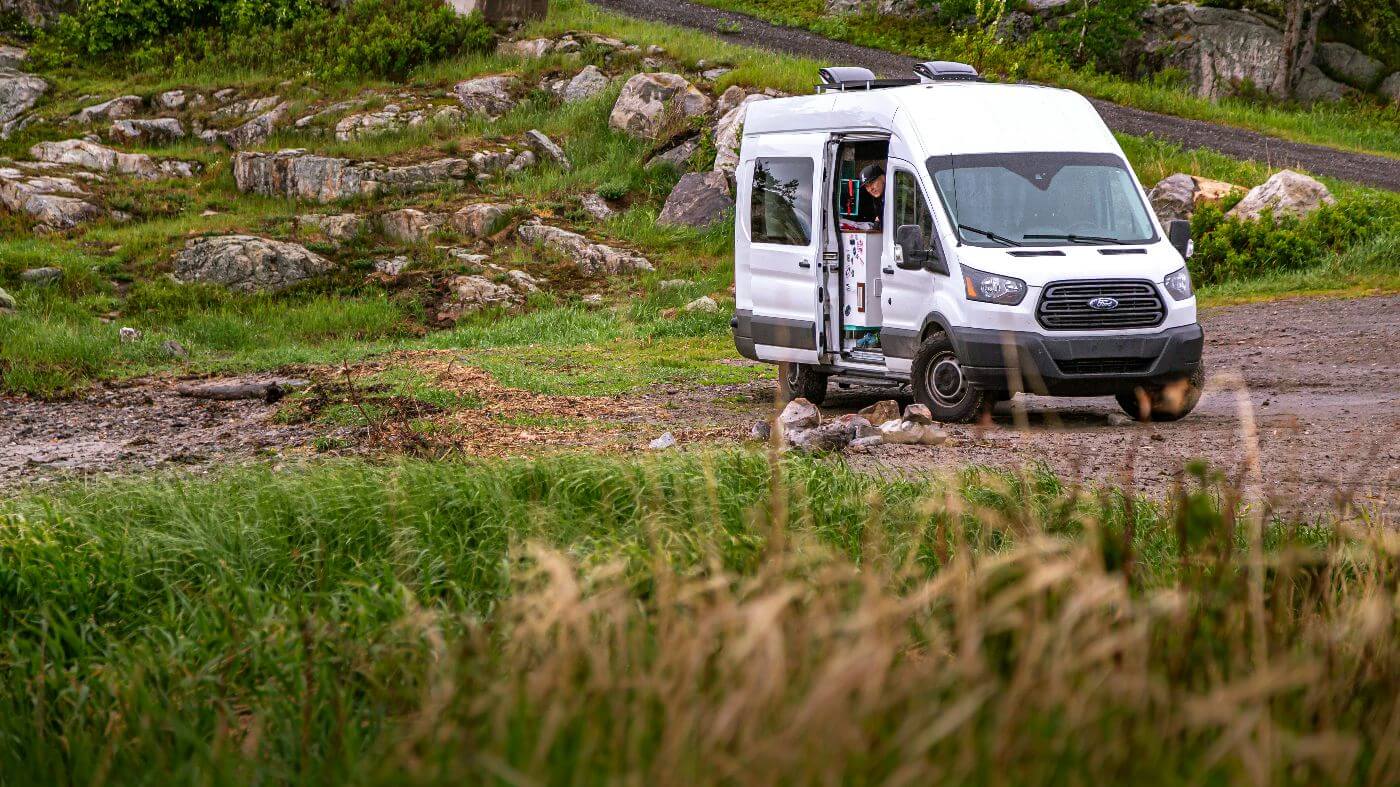

Building out a camper van is exciting, but figuring out the layout can feel a little overwhelming. Where should the bed go? Is there room for a bathroom? What about the kitchen, the seating, and all the gear? The good news is that plenty of people have already worked through these questions, and they have great advice to share.
Below are some camper van layouts and conversions worth checking out, ranging from tiny micro vans to big family rigs. Each one breaks down what works, what doesn’t, and why certain choices matter more than others. Grab a notebook and get ready to gather some great ideas for your own van project.
1. How to Plan Your Camper Van Layout Step by Step
Nick and Sam have been living and traveling in self-built camper vans since 2018, and they’ve put together four of them already. Their newest build, a van they call Dock, follows a five-step process for designing a layout from scratch.
The process starts with two lists: absolute must-haves and nice-to-haves. From there, it moves into measuring the van and breaking the space into “square units,” which is a clever way of thinking about how each piece (sink, fridge, shower, hob) fits into the floor plan. Four different layout ideas get sketched out, with pros and cons for each one. There’s also some great info on tricky details like wheel arches, roof struts for fan placement, and why a sideways bed only works if the van is wide enough for taller people.
What’s really helpful here is how honest they are about the process. Measurements change once the build starts, materials affect the final dimensions, and sometimes the layout you thought you wanted just doesn’t fit your priorities. Their tip to mark everything out with tape on the floor before building is great for anyone who wants to picture the space before cutting wood.
2. Functional Layouts From a Pro Van Builder
Sarah and Alex run a custom van conversion company that has built 26 vans over seven years, so they really know their stuff. They’ve put together six of their most popular floor plans, starting with what they call the Beach House layout, which is their most-built design.
The Beach House features a convertible table-bed in the back, a wet bath, a big kitchen, and lots of storage. Then there’s the Bungalow, which swaps the convertible bed for a full-time platform bed with storage underneath (perfect for bikes, skis, or even a large dog crate). The Gear Van skips the indoor bathroom in favor of bike storage and a tri-fold bench seat, while the original Family Van uses a Happy Jack bed lift system to create two sleeping areas. There’s also Family Van 2.0 (a simpler family version) and the Family of Three layout, which has a full-time side-to-side bed.
The most valuable part comes at the end with three big tips: design around your fixed spaces first, keep things simple, and build for what you’ll actually be doing 90% of the time. Too many people plan their vans around rare scenarios that almost never happen, and that leads to layouts that don’t really work for daily use.
3. Choosing the Right Bed Type for Your Build
The bed type is actually the foundation of any van layout. Once that decision is made, everything else falls into place around it. ADF Sprinters, who have built thousands of camper vans, breaks down three main bed options to consider.
First is the platform bed, which sits up high and creates a huge storage area underneath for gear, bikes, or larger equipment. These can be fixed or removable, depending on how much flexibility someone wants. Second is the Trax bed system, an exclusive design that folds up and out of the way using gas struts. It gives you front-to-back walkthrough access during the day and converts into a sturdy bed at night. The third option is the dinette lounge, which works as seating during the day and a bed at night.
The dinette lounge has one big advantage that the others don’t: it’s the only bed setup that can safely have seat belts installed, which means up to six or eight passengers can ride along. The space underneath also works great for housing batteries, inverters, and water tanks. For anyone who travels with a crew or wants a multi-purpose space, the dinette is hard to beat.
4. The Best Camper Van Layout From Custom Crafted Vans
The team at Custom Crafted Vans (a boutique builder out of Boise, Idaho with over 50 builds under their belt) has put together five layouts they think are best for the year ahead. With more than 300 consult calls under their belt, they’ve heard just about every wish list imaginable.
The five layouts include family van builds (with the popular pop-top rooftop tent option), full bathroom priority builds, the Beach House style with its convertible dinette, platform bed builds for gear haulers, and everyday driver vans that double as adventure rigs. Each one comes with trade-offs. For example, platform beds give you tons of storage, but the bench seats often end up housing batteries and plumbing rather than personal items.
One thing that stands out is the advice on van size. They strongly recommend the 170 extended Sprinter for families because it’s the longest van on the market, and the 3500 series handles the extra weight better. They also push back on the bad reputation that Sprinters sometimes get, pointing out that diesel engines actually need less maintenance than gas ones. The final tip is simple: plan ahead, talk to builders, and keep things functional rather than overly complicated.
5. A Full DIY Build of a Tiny Home on Wheels
This start-to-finish DIY build turns a 2017 Ford Transit into a tiny home on wheels. It’s a long-wheelbase, extra-high-roof model, which gives plenty of headroom and space to work with. The whole project took 40 days and cost around 6,000 pounds for the conversion itself.
The build starts with stripping out the old plywood, fixing leaks, and installing an insulated subfloor. From there, it moves through framing the walls, plylining, building bed inserts (a smart trick to fit a six-foot-three mattress), and creating a hidden toilet compartment that doubles as extra seating. The kitchen comes from IKEA flat-pack units, modified to fit the van’s narrower space. The build also includes a 305-watt solar panel, a 200-amp-hour lithium battery, a Maxxair fan, and a beautiful slatted ceiling with American Walnut stain.
What’s great about this build is how it shows the real, messy process, including the mistakes. The original laminate countertop got swapped out for solid beechwood. The overhead cabinets were tricky to level. The ceiling probably should have gone in before the furniture. These honest moments are useful for anyone planning their own build.
6. The Best Layout for a Small Micro Camper Van
For anyone working with a small van, this final layout is perfect. It’s a Citroen Dispatch micro camper that has gone through three different layouts, and the owner finally landed on what she calls the best version yet.
The biggest change was swapping the original three front seats for two, which created a walkway between the cab and the back. This made the van feel safer (no more getting out at night to access the sleeping area) and a lot bigger. In the back, there’s a single couch that flips out into a double bed, supported by a metal beam her dad made. The kitchen has a double gas hob and a rechargeable tap, with water tanks stored underneath. Bungee cords on the walls hold jackets and gear, and a safe keeps cameras and laptops secure when the van is left alone.
There’s also some honest advice about what works and what doesn’t in a small van. Solar panels would have been a huge help (the leisure battery struggles to keep the fridge running without them), and a portable solar power station has become a backup solution. The roof vent stays open almost 24/7 in summer because there’s no air conditioning. For anyone considering a micro camper, this layout shows that small vans can still be cozy, functional, and full of personality.
Wrapping It Up
There’s no single “best” camper van layout out there. The right one depends on how the van will be used, who’s traveling in it, and what matters most day to day. Some people need a full bathroom and a big kitchen. Others want maximum gear storage and minimal fuss. Families need extra seats and sleeping spaces, while solo travelers can get away with a simple flip-out bed and a few bungee cords.
The biggest takeaway from these layouts is the same one the pros keep coming back to: design the van around what will actually happen 90% of the time. Skip the “what if” scenarios and focus on the real stuff. With a little planning, even a small van can feel like home, and the right layout makes all the difference.